What Are the Most Common Lift Station Replacement Parts?
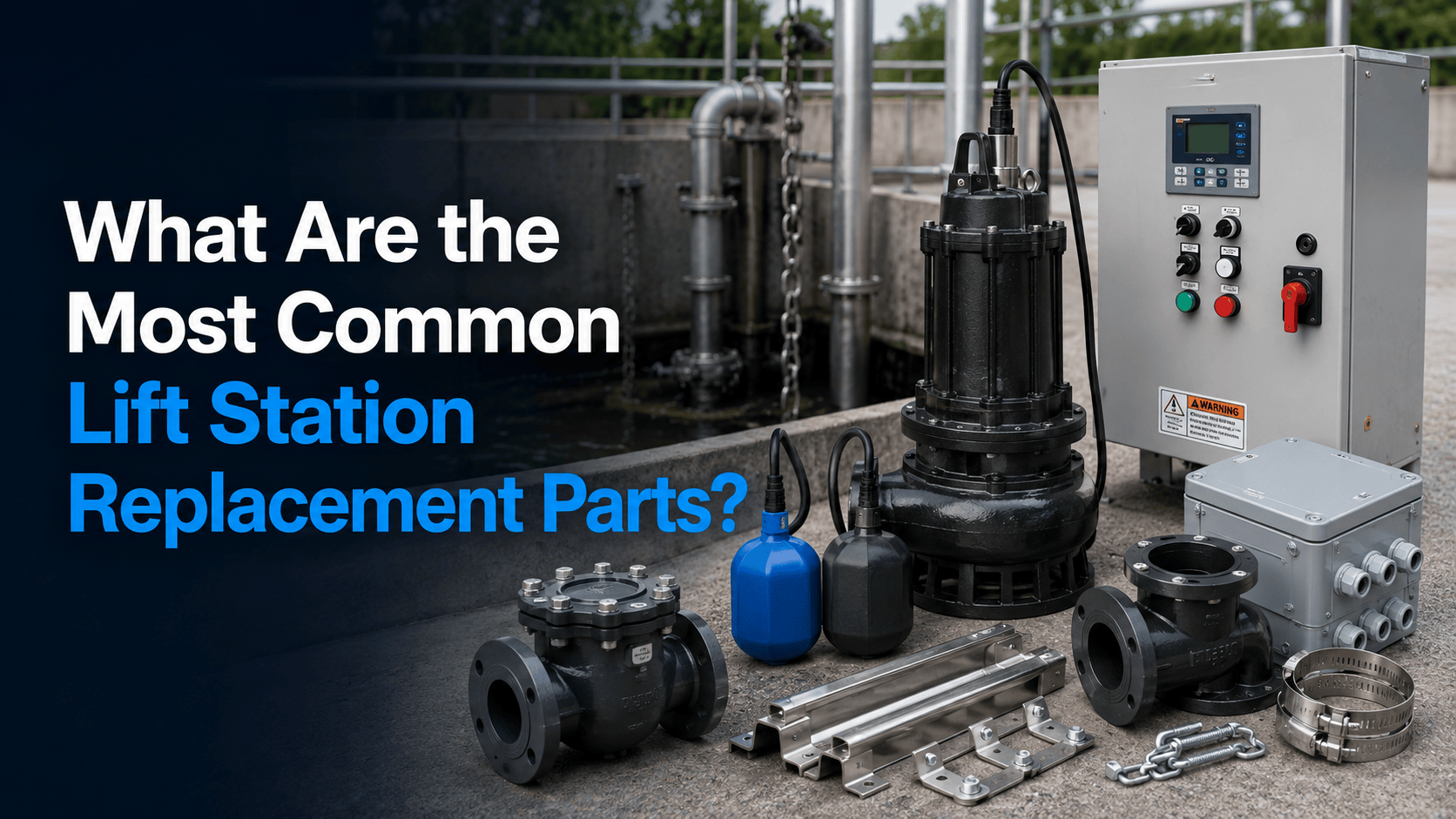
A lift station moves wastewater from a low point to a higher elevation when gravity flow isn’t possible, and like any hardworking pumping system, its components wear out over time. The most common lift station replacement parts are the submersible pumps, float switches, control panels, check valves, and guide rail hardware—the pieces that handle constant cycling, corrosive sewage, and electrical load day after day. Knowing which parts fail most often helps you keep spares on hand and avoid emergency downtime.
At Wastewater Supply, we’ve spent decades helping contractors, municipalities, and property owners across the country source the right replacement components for their systems. If you already know what you need, you can browse our full selection of lift station replacement parts from trusted manufacturers like Zoeller, Liberty Pumps, Franklin Electric, and SPI. If you’re still diagnosing the problem, this guide walks through every component that commonly needs replacing—and the warning signs that tell you it’s time.
Below, we break down the parts that fail most frequently, why they fail, and how to recognize a problem before it becomes a backup or an overflow.
Lift Station Pumps Are the Most Frequently Replaced Component
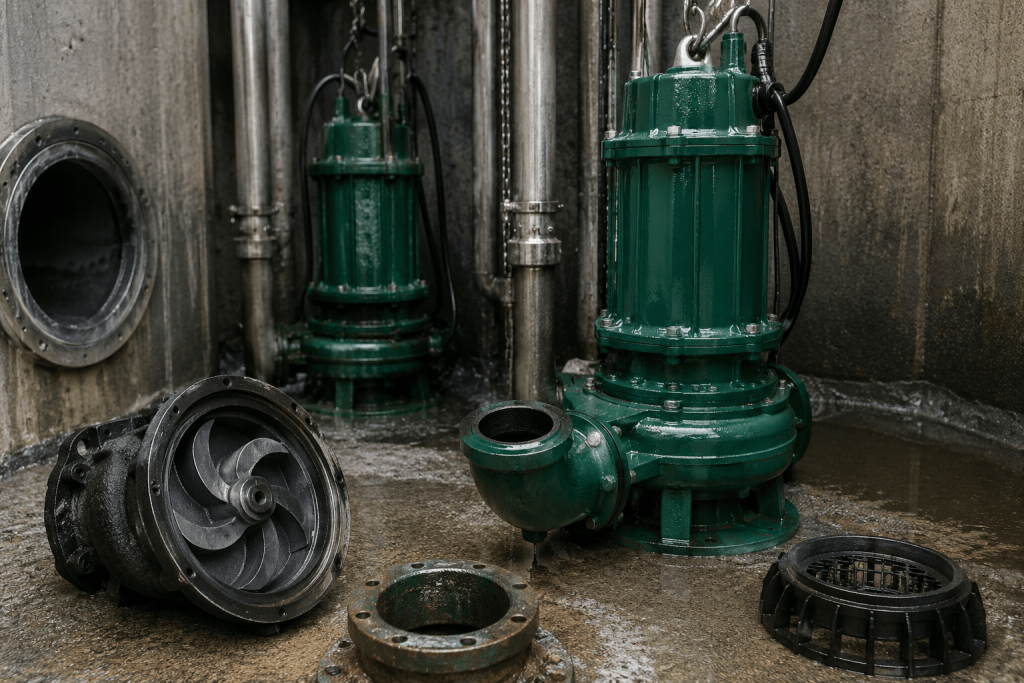
The pump is the heart of any lift station, and it’s the part most likely to need replacement. Because pumps run constantly and handle raw sewage, solids, and debris, they endure more mechanical stress than any other component in the system. Most submersible sewage and grinder pumps last between 5 and 15 years depending on duty cycle, water quality, and maintenance.
When a pump fails, the culprit is usually one of a handful of internal parts rather than the whole unit. The components that wear out most often include:
- Impellers — these spin to move water and gradually wear down or clog with stringy debris, especially in non-grinder pumps.
- Mechanical seals — these keep wastewater out of the motor housing; a failed seal lets moisture in and burns out the motor.
- Bearings — worn bearings cause vibration, overheating, and eventually motor failure.
- Cutter assemblies — on grinder pumps, the cutting components dull over time and lose their ability to shred solids.
Wastewater Supply stocks complete replacement pumps and repair components from leading brands, so whether you need a single seal kit or a full grinder pump, you can match the exact model your station already uses.
Float Switches and Level Controls Fail More Often Than Operators Expect
Float switches are among the most failure-prone parts in a lift station because they’re constantly submerged and mechanically cycling. These devices tell the pump when to turn on and off based on water level, and when one sticks or fails, the pump may run dry, short-cycle, or fail to activate at all—any of which can lead to an overflow or a burned-out motor.
Lift stations typically use one of two float types, and both are common replacement items:
- Mechanical (mechanically activated) floats — durable and widely used, but the internal switch eventually wears out.
- Mercury floats — reliable for precise level sensing, though many operators now choose mercury-free alternatives for environmental reasons.
Because floats are inexpensive relative to the damage a failed one can cause, many of our customers keep spares on hand. We carry float switches in a range of cord lengths and activation styles to match nearly any control configuration.
Control Panels and Electrical Components Keep the System Running
The control panel is the brain of a lift station, and its electrical components are common replacement parts because they bear the brunt of every pump cycle, power surge, and weather event. A simplex panel runs a single pump, while a duplex panel alternates between two pumps for redundancy—and both contain parts that degrade with use.
The electrical components most likely to need replacement include:
- Relays and contactors — these switch power to the pump and wear out from repeated cycling.
- Circuit breakers — these trip and degrade after repeated overloads or surges.
- Capacitors — these help start and run the motor and are a frequent point of failure.
- Alarm components — high-water alarm floats, buzzers, and beacons that warn of a problem need occasional replacement.
A failing control panel often shows subtle symptoms first, such as intermittent operation or nuisance alarms. Replacing worn electrical parts early is far cheaper than dealing with a complete panel failure during a high-flow event.
What Valves Does a Lift Station Need?
Every lift station relies on at least two types of valves, and both are routine replacement parts. Valves manage the direction and flow of wastewater through the discharge piping, and because they seal against constant pressure and debris, their internal components wear over time.
The two essential valves are:
- Check valves — these prevent wastewater from flowing back into the wet well when the pump shuts off. A failed check valve causes the pump to short-cycle and wastes energy.
- Gate or shut-off valves — these isolate the pump for maintenance without draining the system. Worn seats and stems are common failure points.
Choosing the right valve material matters in wastewater applications. Wastewater Supply offers valves built to handle corrosive sewage environments, helping your discharge system stay reliable between service visits.
Guide Rails, Basins, and Access Hardware Round Out the System
Beyond pumps and electrical parts, the structural and access components of a lift station also need periodic replacement. These parts make pump removal and routine service possible, and when they corrode or break, maintenance becomes dangerous and time-consuming.
Commonly replaced structural components include:
- Guide rail systems — these let a submersible pump be lowered onto and lifted off its discharge connection without anyone entering the wet well.
- Lift chains and stainless hardware — these corrode over time and are critical for safe pump removal.
- Risers and access lids — these provide entry to the basin; cracked or warped lids create safety and odor problems.
- Fiberglass basins and wet wells — while long-lasting, these occasionally require replacement or repair after decades of service.
As a stocking distributor of AK Industries, TOPP Industries, and Polylok products, we can supply basins, risers, and access hardware sized to your existing station.
How Do You Know When a Lift Station Part Needs Replacing?
The clearest signs a lift station part needs replacing are unusual noises, frequent alarms, short-cycling, and rising energy bills. Most components give warning before they fail completely, and recognizing these signals lets you order replacement parts before an emergency strikes.
Watch for these common warning signs:
- The pump runs constantly or cycles on and off rapidly.
- The high-water alarm activates more often than usual.
- You hear grinding, humming, or rattling from the pump.
- Wastewater levels rise even though the pump appears to run.
- Energy consumption climbs without an increase in usage.
Here’s a quick reference for typical service life and the most common reasons each part fails:
| Component | Typical Service Life | Most Common Failure Cause |
|---|---|---|
| Submersible pump | 5–15 years | Seal failure, clogging, motor burnout |
| Float switch | 2–5 years | Worn switch, tangled or stuck float |
| Check valve | 5–10 years | Worn flapper or seat, debris buildup |
| Control panel components | 5–10 years | Worn relays, surge damage, moisture |
| Guide rails / hardware | 10+ years | Corrosion, mechanical wear |
Service life varies widely based on usage, water quality, and maintenance, so treat these ranges as general guidance rather than fixed schedules.
Frequently Asked Questions About Lift Station Replacement Parts
How often should lift station pumps be replaced?
Most lift station pumps last between 5 and 15 years, but actual lifespan depends heavily on how often the pump cycles and the quality of the wastewater it handles. Pumps in high-demand commercial or municipal stations wear faster than those in low-flow residential settings. Regular inspections and addressing small issues early can extend a pump’s service life significantly.
Can I replace lift station parts myself, or do I need a professional?
Simple components like float switches or alarm parts can sometimes be replaced by an experienced operator, but pump and electrical work usually requires a licensed professional. Lift stations involve confined-space entry, electrical hazards, and exposure to wastewater, all of which carry real safety risks. When in doubt, hire a qualified technician and order the correct parts in advance to minimize downtime.
What causes lift station pumps to fail prematurely?
The most common causes of premature pump failure are clogging from non-flushable items, seal failure that allows water into the motor, and excessive short-cycling caused by a bad float or check valve. Running a pump dry or operating it outside its rated conditions also shortens its life. Proper sizing and routine maintenance are the best defenses against early failure.
Are lift station replacement parts interchangeable between brands?
Some parts, such as generic floats and valves, are interchangeable across brands, but pumps, impellers, and control components are usually model-specific. Using the wrong part can cause fitment problems or void warranties. The safest approach is to match the manufacturer and model number of your existing equipment, and our team is happy to help you confirm compatibility.
How much do lift station replacement parts cost?
Costs range widely, from under $50 for a float switch to several thousand dollars for a complete pump or fiberglass basin. Smaller components like valves and relays fall in between. Keeping common wear items in stock is an affordable way to avoid the higher costs and disruption of emergency replacements.
Keep Your Lift Station Running with the Right Parts
The most common lift station replacement parts—pumps, floats, control panel components, valves, and access hardware—all wear out on predictable timelines, which means most failures are preventable with the right spares and a little planning. Recognizing the early warning signs and matching replacements to your existing equipment keeps your system reliable and your costs under control.
At Wastewater Supply, we make it easy to find the exact components your lift station needs, backed by the brands the industry trusts and the expert guidance that comes from decades in the wastewater business. Whether you’re stocking up on wear items or troubleshooting an active problem, our team in Noblesville, Indiana is ready to help you get the right part the first time—so your system keeps moving wastewater exactly where it needs to go.